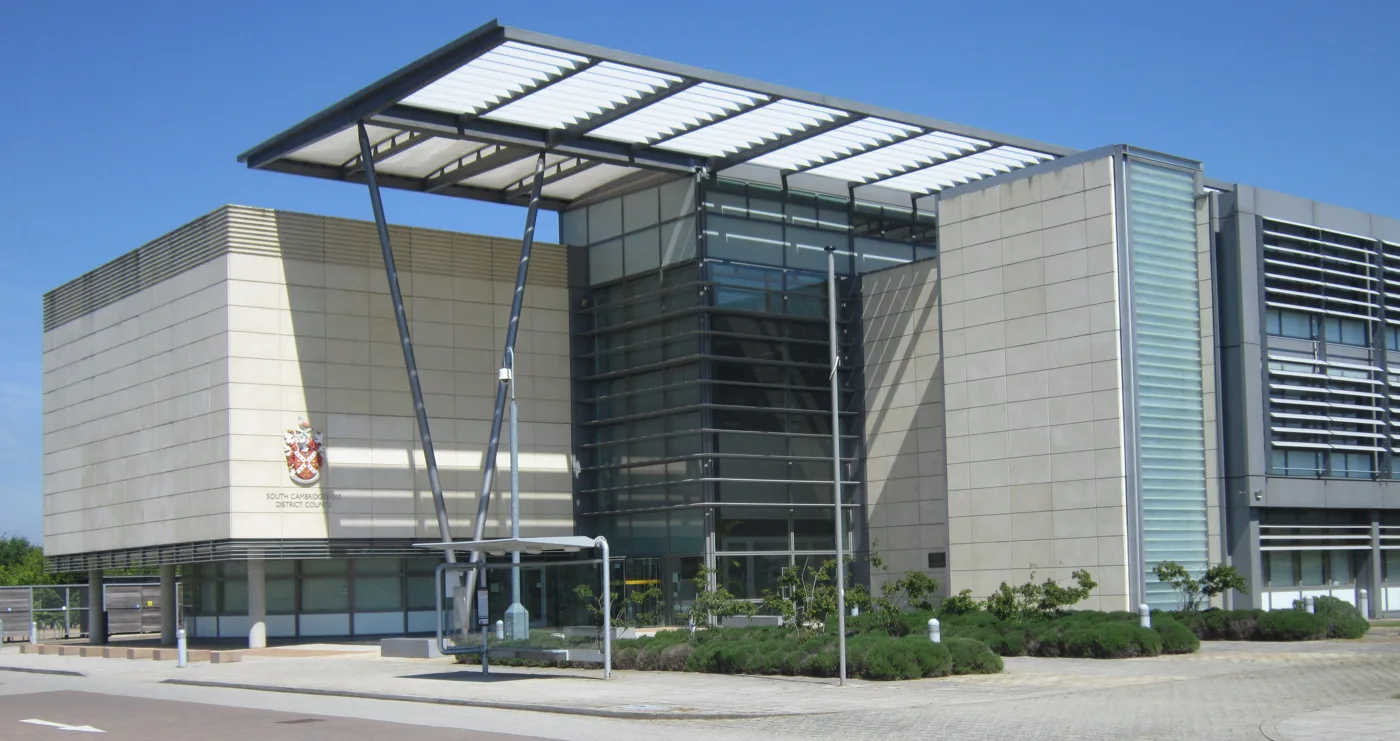

Cabinet on 17 November recommended the Local Plan go to government unchanged after 2,863 comments. South Cambs councillors vote on 8 December.
Council officers say the Greater Cambridge Local Plan should be sent to government for examination with no changes, after the final consultation drew 2,863 comments. South Cambridgeshire’s councillors will make the decision on Tuesday 8 December.
Updated 18 November: at the joint meeting on Tuesday 17 November, the cabinet recommended that Full Council submit the plan and its policies map for examination, with the supporting appraisals and consultation statement. It also recommended asking the inspector to propose any “main” modifications needed to make the plan sound. (Cabinet decision, 17 November 2026)
The plan will guide where homes, jobs and roads go across South Cambridgeshire and Cambridge until 2045. It needs over 50,000 new homes between 2024 and 2045, and around 37,000 of those are already planned through existing permissions and allocations. (Cambridge City Council, 8 July 2026)
What happens and when
The steps between now and examination are:
| Date | Meeting | What it decides |
|---|---|---|
| Tuesday 17 November, 5.30pm | Joint cabinet meeting of both councils | Recommended submission (decided) |
| Thursday 26 November | Cambridge City Council | Whether to submit |
| Tuesday 8 December | South Cambridgeshire District Council | Whether to submit |
| First half of 2027 | Independent Planning Inspector | Whether the plan is legal and sound |
The dates are from the council’s announcement and the cabinet agenda. (South Cambridgeshire District Council, 9 November 2026) (Cabinet agenda, 17 November 2026)
Both councils have to agree. Submitting by the end of 2026 meets the government’s original deadline for plans drawn up under the current system, the cabinet report says.
What people objected to
The consultation ran from 3 August to 25 September. The 2,863 representations came from 778 people and organisations. Most comments were about the overall development strategy and three sites:
- the Cambridge Biomedical Campus, around Addenbrooke’s
- Cambourne North
- land next to the A11 and A1307 at Grange Farm, near Great and Little Abington
That breakdown is in the officers’ report to the 17 November cabinet. (Cabinet report, Submission of Greater Cambridge Local Plan)
On Grange Farm, objectors raised traffic at the Fourwentways roundabout and on the A1307 and A11. They also raised the River Granta and its chalk aquifer, flood risk, and the separation of the Abingtons from the new homes. Some questioned how the site was assessed.
Officers accept the site scored an overall red for suitability in the councils’ own land assessment. The report says that is “not untypical” for large strategic sites, and that landscape impacts can be mitigated. Its capacity was already cut before this consultation. (Cambridge City Council, 8 July 2026)
On Cambourne North, comments covered transport evidence, the green buffer meant to keep the new homes visually apart from nearby villages, and whether health, shops and water will arrive in time.
Developers made the opposite case. Several said the plan allocates too few homes and too little employment land, and that more villages should take growth.
Officers: no changes needed
For every site and policy, the report’s conclusion is the same. Officers say the plan is sound and should go forward as consulted on. For Grange Farm and Cambourne North, it says it is “not proposed to amend the policy in relation to the site boundary, the quantum of development or proposed land uses”.
Water is the most common thread. The report says growth has been timed to match the expected water supply. Homes at Grange Farm are likely to face a condition stopping anyone moving in until the Grafham water transfer is running, or other supply is found. Anglian Water has agreed that sewage treatment capacity is not a barrier, as long as the infrastructure is planned and paid for.
The inspector will judge the plan against the 2024 national planning rules, not the version the government published this summer. The report says that applies to plans already at an advanced stage.
Cllr Henry Batchelor, South Cambridgeshire’s lead cabinet member for planning, called it “a significant milestone in a process that has involved years of work and huge engagement with local communities”. (South Cambridgeshire District Council, 9 November 2026)
What it means for you
- The comment window is closed. Every one of the 2,863 representations goes to the inspector with the plan, so if you commented in the summer, your view is on the record.
- You can watch the decisions. Full Council meetings are public.
- The examination is the next chance to be heard. Inspectors run public hearing sessions, and people who made representations can ask to take part.
- Until the new plan is adopted, the 2018 plans still apply. Planning applications in your village are judged against those, alongside national policy. The plan we covered at the start of the final consultation sets out what changes once it is adopted.
Recent appeals show why the timetable matters. In October an inspector allowed 40 homes at Great Abington after rejecting the council’s housing supply figure.
Have your say