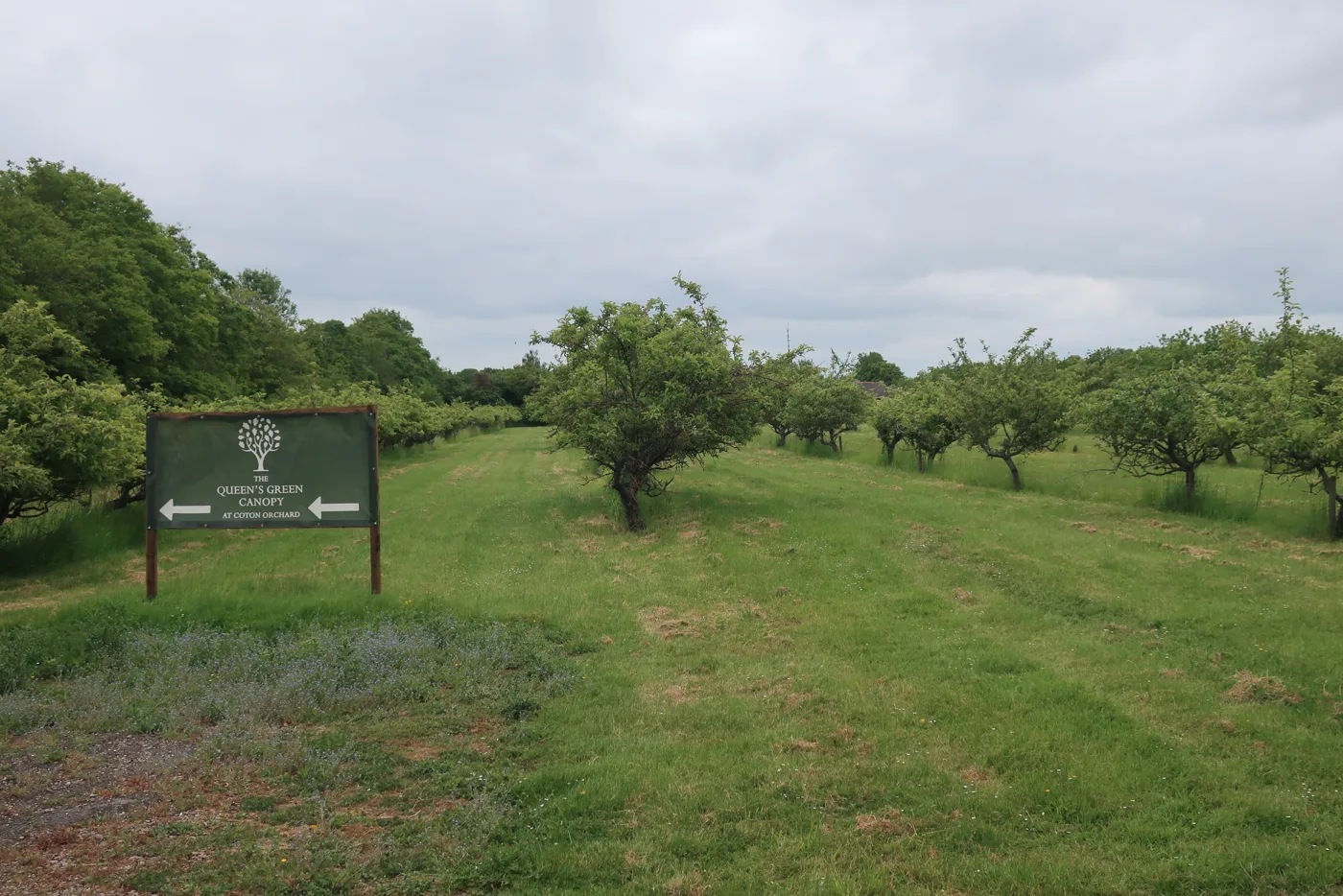

The minister approved the £192m busway on 8 September, overruling his own inspectors on Coton Orchard's veteran apple trees. 309 of 336 responses objected.
The Cambourne to Cambridge guided busway has been approved. A transport minister made the Transport and Works Act order on 8 September 2026, nearly ten months after the public inquiry closed, and granted deemed planning permission with it.
The decision went against most of the people who wrote in. Of the 336 representations the inquiry received, 309 objected and 16 supported the scheme.
It also went against the inspectors on one point. The panel that ran the inquiry found that the compensation plan for Coton Orchard’s veteran Bramley apple trees was not good enough to satisfy national planning policy. The minister disagreed, and approved the scheme anyway.
What the order authorises
The decision letter was signed on behalf of the Secretary of State for Transport by Lord Hendy of Richmond Hill, Minister of State. The applicant is Cambridgeshire County Council, working with the Greater Cambridge Partnership.
The order allows the council to build, maintain and operate:
- a guided busway between Cambourne and Cambridge, with intermediate bus stops
- an emergency and maintenance access track alongside it
- a travel hub building and park and ride site at Scotland Farm, Dry Drayton
- bridges over the M11 and over the Bin Brook
- access roads, temporary construction compounds and highway crossings
- drainage works, attenuation ponds and infiltration ponds
- the stopping up, diversion and creation of public rights of way
It also authorises compulsory purchase of the land needed, temporary closure of highways, and the acquisition of replacement land in exchange for open space taken.
The Greater Cambridge Partnership puts the cost at just over £192 million. Its route runs from Cambourne to Cambridge by way of the new Bourn Airfield development, Hardwick, Coton and the university’s Cambridge West site. The Scotland Farm hub is to have 2,000 car spaces and 300 cycle spaces. The partnership says journey times between Cambourne and Cambridge will be halved, with buses every ten minutes to the city centre, the railway station and the Biomedical Campus.
Who wrote in, and what happened to their objections
The application was made on 12 November 2024. A pre-inquiry meeting followed on 24 June 2025, and the inquiry itself sat for 22 days between September and November 2025, with site visits.
The letter records that most objectors accepted the need for better public transport between Cambourne and Cambridge. That included Cambridge Past, Present and Future, Coton Parish Council and the Mayor of Cambridgeshire and Peterborough. Their argument was about the answer, not the problem. Friends of the Cam and the Cambridge and Peterborough branch of the Campaign to Protect Rural England went further, and disputed the scale of the transport need itself.
The veteran trees, and where the minister parted company with his inspectors
Coton Orchard is a County Wildlife Site. Twelve veteran Bramley apple trees there are covered by a Tree Preservation Order. Under the scheme, three of those are to be retained, and three more are to be moved.
The inspectors were not persuaded that moving them would work. The letter records that the panel “was not confident that this could be undertaken without loss or deterioration of those trees”, and gave substantial weight to that risk.
That matters because of a specific rule. National planning policy says development that would cause the loss or deterioration of irreplaceable habitats, veteran trees among them, should be refused unless there are wholly exceptional reasons and a suitable compensation strategy is in place. The applicant had prepared a compensation package, but it was still a draft, with more detail expected. The panel concluded it could not count as a suitable compensation strategy, and that harm to the trees would have occurred in any event.
The minister took a different view. He found the benefits of the scheme amount to wholly exceptional reasons, and that a planning condition would secure a suitable compensation strategy before any work starts. The letter says so plainly: “the Secretary of State takes a different view to that taken by the Panel”.
That condition is number 13, and it is worth knowing what it requires:
- no site clearance, enabling work, preparatory work or development can start, and no veteran tree can be cut down, uprooted, destroyed, pruned or damaged, until three documents are approved in writing by the local planning authority: a revised Veteran Tree Mitigation Strategy, a detailed Veteran Tree Translocation Method Statement and a revised Veteran Tree Compensation Strategy
- the mitigation strategy must identify where the three trees go, as close to their current positions as is reasonably feasible, in the conditions that best ensure their survival
- if any translocated tree dies or is destroyed within ten years of the last one being moved, the compensation measures must be implemented
- the same applies if any of the three retained trees nearest the busway dies within five years of the busway being completed
Even with that condition, the minister agreed with the inspectors that the loss of habitat at Coton Orchard County Wildlife Site is permanent harm, and that substantial weight should be given both to it and to the risk to the trees being moved.
The balance the minister struck
The letter sets out the weightings explicitly. Weighing substantially against the scheme:
- harm to the Green Belt, which the minister accepted amounts to inappropriate development
- permanent harm to Coton Orchard County Wildlife Site
- the potential harm to the veteran trees proposed for translocation
Weighing substantially in favour:
- public transport benefits described as fundamental to the spatial strategy for Greater Cambridge
- unlocking the delivery of other schemes in the area
- improvements to active travel
Construction noise, harm to other wildlife sites, the effect on the character of the area and harm to designated heritage assets weighed moderately against. Economic benefits weighed moderately in favour. On that balance the minister found the harms were outweighed, and that very special circumstances exist to justify inappropriate development in the Green Belt.
Two other findings are worth recording. A 10% biodiversity net gain is secured by condition 17, though the inspectors gave it only moderate weight because the figure needs recalculating on a revised metric. And a holding objection from Anglian Water and Cambridge Water was still outstanding when the letter was written, though both sides told the inquiry they expected to agree.
On how the project was run, the letter is blunt about what it heard and equally blunt about what it can do. Submissions to the inquiry were “extremely critical” of the way Cambridgeshire County Council and the Greater Cambridge Partnership promoted the project, and of the University of Cambridge’s involvement. The minister’s answer is that this is not a matter for him, and should be pursued separately.
What happens next, and how long anyone has to challenge it
The Greater Cambridge Partnership says it will now begin the full tender process, with contractors expected to be appointed in the new year to complete the detailed design. Further engagement with parish councils and landowners happens during that period. Main construction follows the design phase, though some preparatory works may begin earlier.
There is a deadline on the permission itself. Condition 1 requires the development to be commenced no later than three years from the date the order comes into force.
There is also a window to challenge it. Anyone aggrieved by the making of the order can apply to the High Court on the grounds that it is outside the powers of the Transport and Works Act 1992, or that a requirement of the Act was not complied with. That application must be made within six weeks beginning with the day after the notice of determination is published online, which the council is required to do. The letter advises anyone considering it to take legal advice first.
Separately, the Secretary of State for Housing, Communities and Local Government issued a letter the same day granting the Open Space Certificate the scheme needs.
What it means for you
If you live in Cambourne, Hardwick, Coton, Dry Drayton or at Bourn Airfield, the principle is now settled and the argument moves to detail. The design is not finished. The partnership says parish councils and landowners will be engaged during the detailed design stage, which starts once contractors are appointed early next year. That is the stage at which alignment, planting, bus stop positions and the layout of the Scotland Farm hub get decided.
If your land is affected, the order carries compulsory purchase powers, and the council has been asked to provide an amended Book of Reference reflecting changes in land interests at Bourn Airfield.
If you objected on the trees, condition 13 is the document to watch. Nothing can be cleared at Coton Orchard until the local planning authority approves the three strategies it requires, and those go to the council in writing. The ten-year and five-year survival clocks start later, on translocation and on completion.
Nobody should expect buses soon. The order gives three years to start, not to finish, and construction has not been programmed publicly yet.
Our roadworks and travel page tracks what is shut this week across the district, and our planning news page follows the applications behind the district’s big schemes.
Sources
- Cambourne to Cambridge guided busway: Transport and Works Act order, Department for Transport, decision published 8 September 2026
- Decision letter, 8 September 2026 (PDF, 60 pages), reference TWA/24/APP/03
- Cambourne to Cambridge: latest, Greater Cambridge Partnership
- Cambourne to Cambridge: about the scheme, Greater Cambridge Partnership
Have your say